

Headaches are among the most common neurological disorders experienced globally. While pharmacological solutions remain the primary method of treatment, interest in natural remedies has grown significantly in recent years. One such natural remedy often mentioned is watermelon (Citrullus lanatus), a hydrating fruit that is widely consumed during summer. But can watermelon really help relieve a headache? Let’s examine this claim through a theoretical and scientific lens.
Understanding the Root Causes of Headaches
Headaches may stem from a variety of causes, including
-
Dehydration
-
Electrolyte imbalance
-
Nutrient deficiency
-
Environmental heat and stress
The hypothesis that watermelon may relieve headaches is based on its ability to address some of these underlying causes.
Hydration and Watermelon’s Water Content
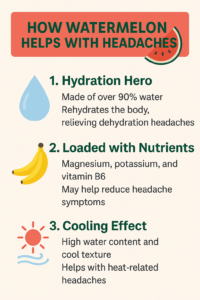
One of the primary causes of headaches is dehydration. Watermelon contains approximately 92% water, making it an excellent natural source for rehydration. Consuming watermelon during or after physical exertion or on a hot day may help restore body fluid levels, potentially reducing headache symptoms caused by dehydration.
Watermelon is rich in electrolytes, including
-
Potassium, which helps maintain fluid balance and regulate muscle contractions, including those that may occur in the blood vessels of the head.
-
Magnesium, which has been found to help reduce the frequency and intensity of migraines in some individuals.

These components suggest that watermelon could assist in reestablishing electrolyte balance, which is often disrupted in those experiencing headaches. Watermelon contains Vitamin B6, which supports neurotransmitter function and may reduce stress — a known trigger for tension headaches. Additionally, watermelon contains L-citrulline, an amino acid that may improve blood flow by relaxing blood vessels, potentially reducing vascular headaches.
Exposure to heat and sun can often trigger headaches due to heat exhaustion or thermal stress. Watermelon’s high water content, low caloric density, and refreshing taste provide a natural cooling effect, which may help reduce body temperature and alleviate discomfort associated with heat-induced headaches.